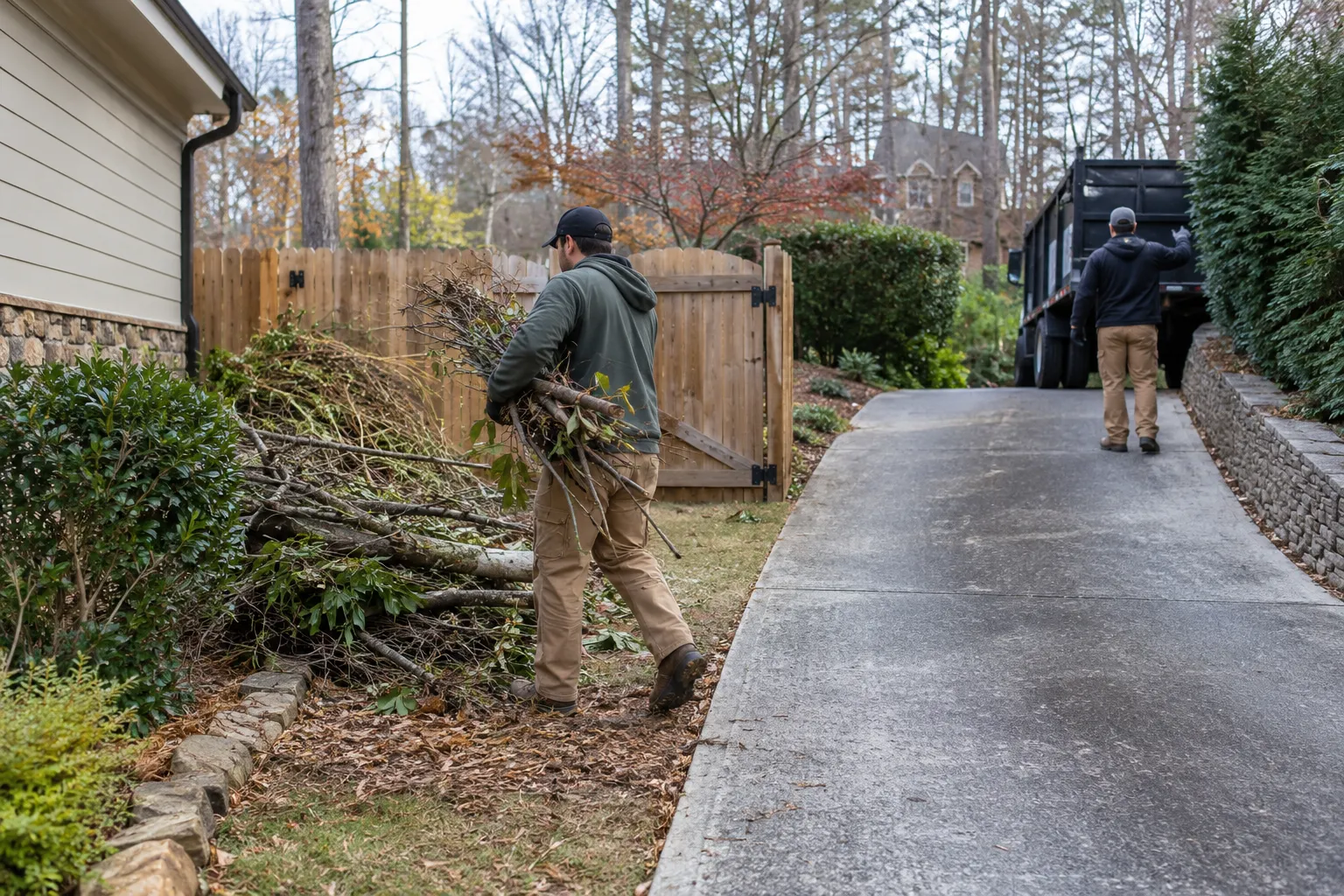
Keep branches, brush, and bagged leaves together in a reachable place, then separate anything that is not ordinary vegetative debris.
Make the pile easy to assess
Place debris on a firm, visible surface where it does not block sidewalks, drains, mailboxes, or traffic. Keep the pile away from utility equipment. If a gate or slope limits access, photograph it with the pile.
Separate materials
Do not mix paint, fuel, pesticides, batteries, household trash, soil, concrete, or treated lumber into a yard-debris pile. These materials may follow different handling rules. Stumps, large logs, and storm-damaged trees can also require specialized equipment.
Photos that help
- A wide view of the full pile
- A side view that shows depth
- The gate, steps, or slope between pile and truck
- The driveway or legal loading area
- Any large-diameter limbs shown beside a familiar object for scale
Bag only what makes sense
Bagged leaves and small clippings are easier to contain, but wet bags can become heavy and tear. Bundle light branches only if doing so is safe and local rules allow it. Avoid placing debris where it will absorb rain before pickup.
Describe the source
Routine pruning debris is different from a fallen tree, land-clearing load, or material mixed with fencing. A clear description helps determine whether the job fits ordinary yard debris removal or needs another provider.