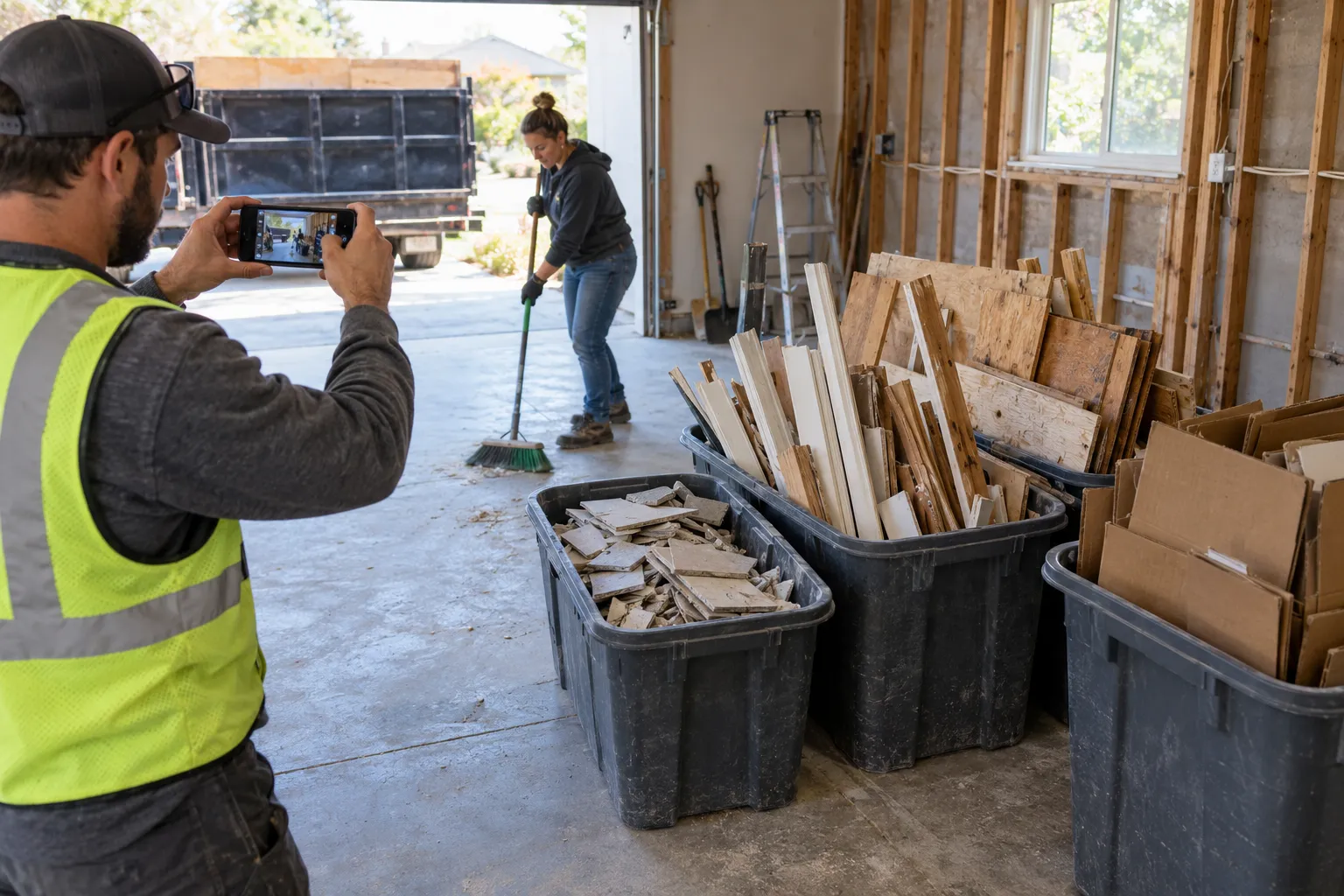
Sort renovation leftovers by material, keep sharp edges contained, and identify anything that may need special handling before a pickup is scheduled.
Inventory the load
List the main materials: clean lumber, drywall, flooring, tile, cabinets, fixtures, cardboard, or metal. Estimate the number of bags, bins, sheets, or piles. Dense material can change labor and disposal needs even when it occupies little space.
Keep risky material separate
Paint, solvents, asbestos-containing material, fuel, chemicals, pressurized cylinders, and unknown dust should not be mixed into a general debris load. Older building materials may need professional testing. Do not disturb a suspect material to prepare it for hauling.
Control sharp edges and dust
Keep nails and screws from protruding. Use sturdy containers sized so they can be moved without overloading. Do not sweep airborne dust while people are working nearby; follow the safety plan for the project.
| Tell the hauler | Why it helps |
|---|---|
| Material types | Clarifies acceptance and disposal path. |
| Approximate volume and weight | Helps plan truck capacity and labor. |
| Floor, stairs, and carry distance | Shows the access work involved. |
| Active work on site | Helps coordinate a safe pickup window. |
Our construction debris removal page explains the ordinary service boundary. Confirm questionable materials before booking.